How-To Guide · October 28, 2026
How to Sell Website Maintenance Plans to Small Business Clients
A short, step-by-step guide to selling monthly website maintenance plans to small business clients, with tips and pricing examples from Reddit.

TL;DR
- To sell a website maintenance plan, package it as a simple monthly care plan with a clear list of what's included, and offer it as part of every website quote instead of as an afterthought.
- Sell peace of mind (the site stays up, safe, and current), not hosting or plugin updates.
- Offer two or three tiers, cap the small edits, and quote new pages and features separately.
- Use a month-to-month agreement with a clear exit so the yes feels low-risk.
A website sale pays once. A maintenance plan pays monthly and keeps you as the person the client calls for changes. Here's how to sell one without it sounding like an extra fee.
How to sell website maintenance plans to small business clients
1. Decide what the plan includes
Write a short list a business owner can read in ten seconds. A typical care plan covers:
- Hosting, SSL, and domain renewal reminders
- Backups and software updates
- Uptime checks, so you notice when the site goes down before customers do
- A set number of small edits each month (hours, menu, prices, photos)
- A short monthly note of what you did
Then write what's not included: new pages, redesigns, and new features get their own quote.
2. Sell peace of mind, not hosting
Owners care that the booking form works and the hours are right, not about plugins. One r/webdev user put it simply: don't sell hosting, sell a complete care plan, because most clients want peace of mind (thread).
Frame it around their time: "You won't have to chase a renewal or figure out why the contact form stopped sending. That's my job."
3. Offer two or three tiers
A basic tier (hosting, updates, backups) and a fuller tier (more edits, faster replies, small SEO or Google Business Profile updates) is enough. Price from your own time and costs. If you're still setting your build price, see how much to charge for a small business website.
4. Put it in every quote
Bring it up at the start, not after launch. One r/smallbusiness commenter said to explain upfront what the client will need after launch and give options: do it themselves, pay hourly, or buy a support package. They added it's often easier to sell after the client sees your work, so offer a discount for bundling it with the build (thread).
5. Cap edits and give a clear exit
"Unlimited edits" is the fastest way to work for free. Define a small edit with examples and quote anything bigger. In an r/codestitch thread about scope creep on subscriptions, one designer said they tell clients exactly what's included and what's extra (thread).
Keep it month to month with 30 days' notice, and say who owns the domain and site if they leave. An easy exit makes the yes easier.
6. Use down and broken sites as your example
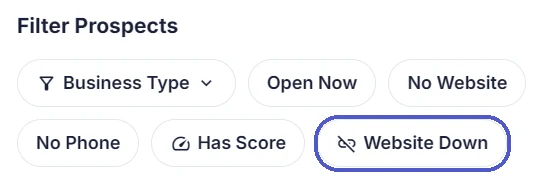
In Locasly, the Website Down filter shows local businesses whose sites aren't loading, and each prospect gets a 0–100 score from PageSpeed and WCAG accessibility checks. Both give you concrete talking points for why ongoing care matters.
When a client signs, move them to Sold in the Locasly pipeline so you can see who's on a plan and who still needs the offer.
What Reddit users reported
These are individual experiences, not benchmarks:
- One r/webdesign user said their team charges $99 to $150/mo for small businesses for hosting, maintenance, and support, billed after the separate build, and that clients can export and self-host but they don't think more than a few have (thread).
- One r/Wordpress user said they start their hosting and management service at $150/mo, and hosting only is $25–$40/mo (thread).
- One r/web_design user said they offer two packages for a five-page static site: $3500 plus $25 a month for hosting and maintenance, or $0 down and $150 a month (thread).
For a first-person take on how ongoing work grows from one happy client, read how keeping one client happy got me referrals and monthly income.
FAQ
How much should I charge for website maintenance?
Base it on your hosting and tool costs plus the time you promise each month. See the Reddit examples above for how a few freelancers price theirs.
Should I include hosting in the maintenance plan?
Usually. One bundled price is easier to explain and keeps you as the go-to person for changes.
What if the client says they don't need maintenance?
Offer the options: they handle it, they pay hourly when something comes up, or they pay a flat monthly fee. Let them choose.
Steps at a glance
- Decide what the plan includes
List hosting, backups, updates, uptime checks, a set number of small edits, and a monthly note, plus what's not included.
- Sell peace of mind, not hosting
Frame the plan around the owner's time and a site that keeps working, not technical tasks.
- Offer two or three tiers
Create a basic and a fuller tier priced from your own time and costs.
- Put it in every quote
Explain upfront what the site needs after launch and offer the plan as an option, with a discount for bundling.
- Cap edits and give a clear exit
Define small edits, quote bigger work, and use month-to-month terms with clear ownership.
- Use down and broken sites as your example
Point to sites that are down or score low on speed and accessibility to show why ongoing care matters.